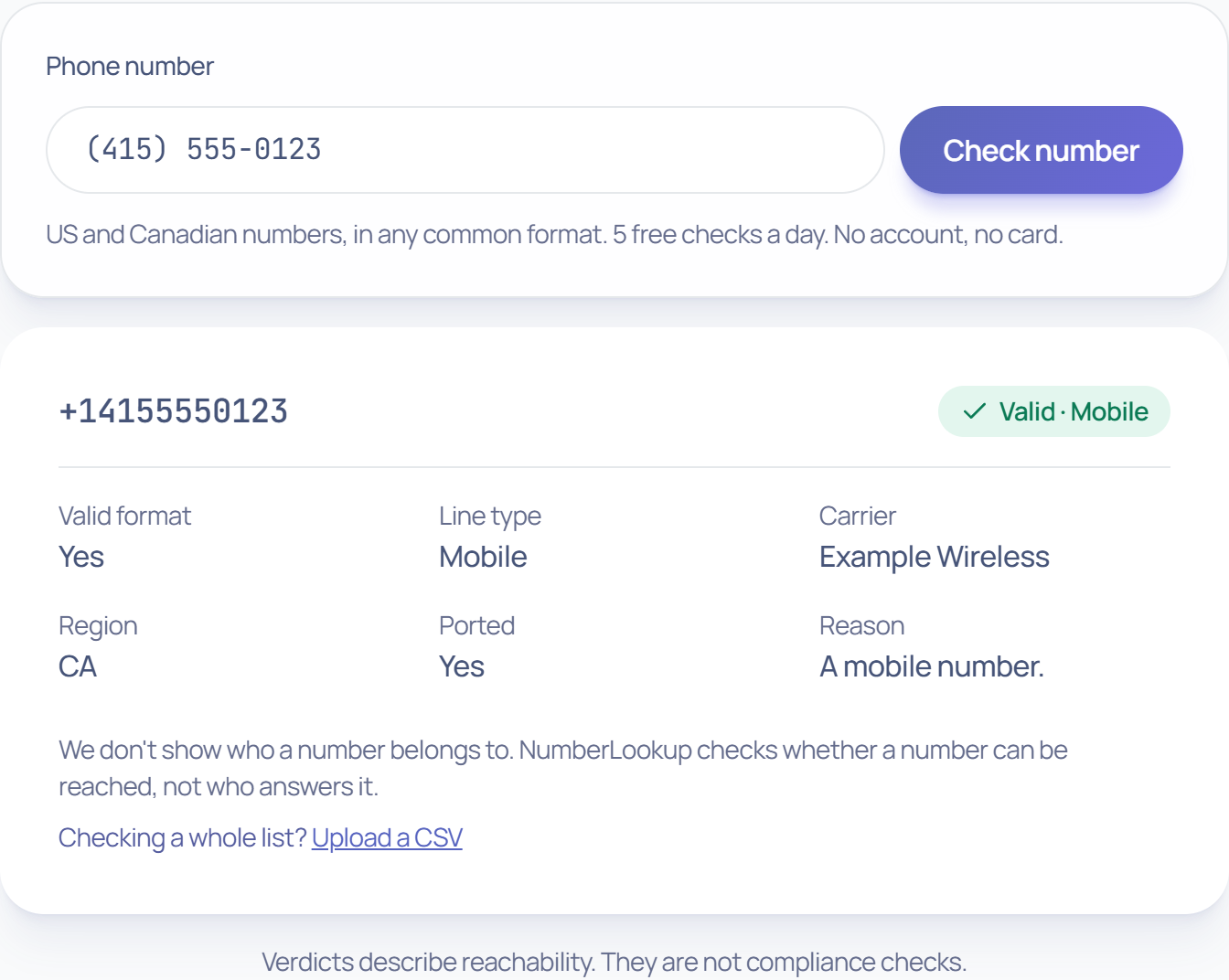
A mobile is the only line you can count on
A text to a working mobile number lands on the phone in someone's pocket. It's the one line type built for texting, which is why it's the one you can plan a campaign around.
So when you plan a texting campaign, don't ask which numbers you can text. Ask which of them are mobiles. Everything else is a phone call.
Most landlines quietly drop your text
Most landlines have no way to show a text. You send it, it leaves your tool, and nothing appears on the other end.
A few phone companies turn a text to a landline into a voice call that reads it out loud. You can't tell from your side which numbers get that, and a robot voice reading your message isn't the first impression you wanted anyway.
Don't throw landlines away, though. The owner who never answers a text might still pick up the house phone. A landline is a number to call.
VoIP depends on the app behind the number
A VoIP number runs over the internet instead of a phone line. Some live in an app that shows texts like any phone would. Others ring a desk phone in an office system that never had texting switched on.
From the number alone you can't tell which one you've got. That's why we mark a VoIP number callable, never textable, and set a voip flag on it. You decide: call it, or text it only if you know the person reads texts there.
Four numbers, four different outcomes
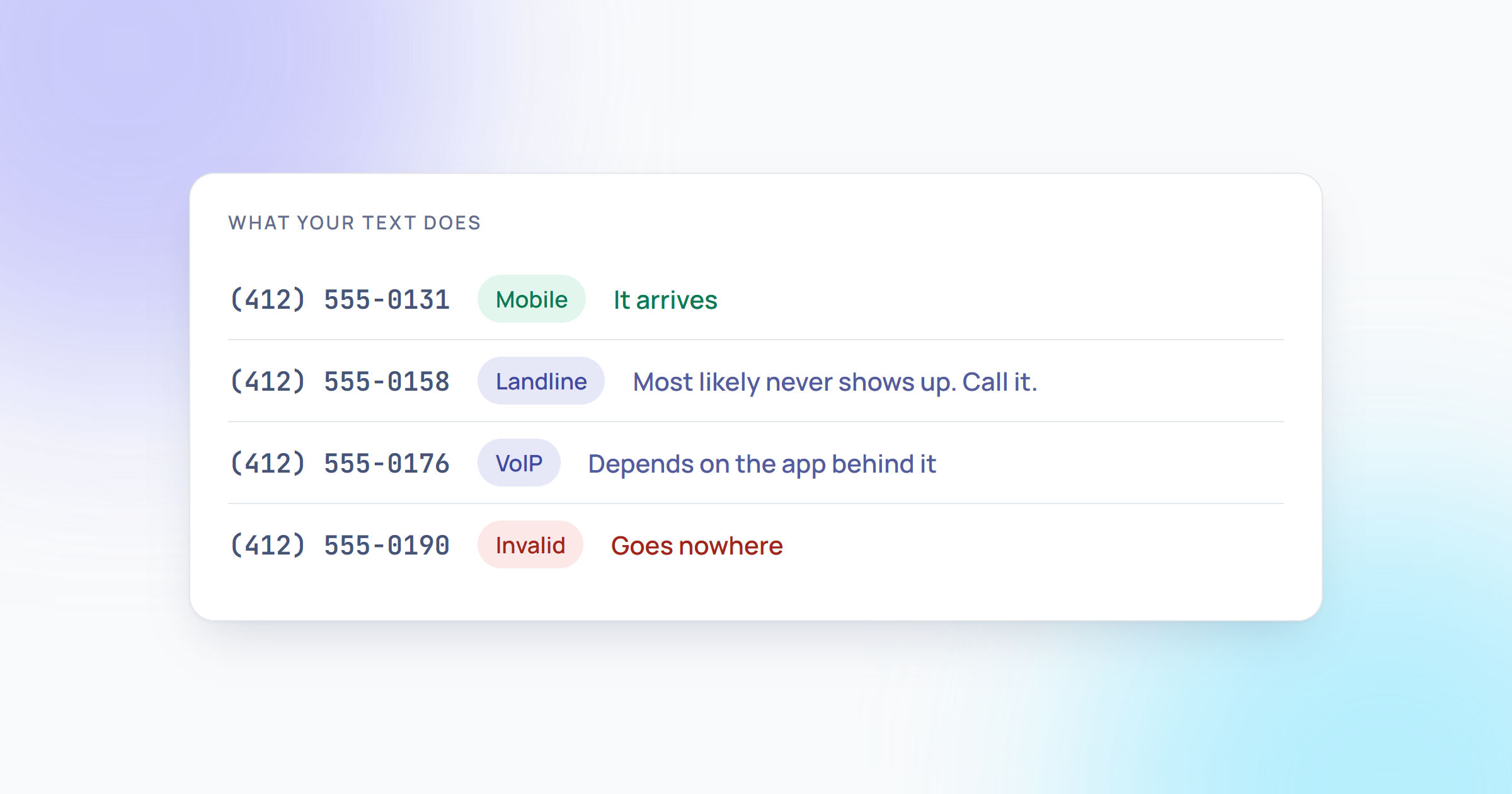
Here are four numbers from one list, made up for this example. They share an area code and look alike. Here's what a check finds, and what happens if you text each one.
| Number | Line type | Verdict | If you text it |
|---|---|---|---|
| (412) 555-0131 | Mobile | Textable | It arrives |
| (412) 555-0158 | Landline | Callable | Most likely never shows up |
| (412) 555-0176 | VoIP | Callable, voip flagged | Depends on the app |
| (412) 555-0190 | None | Invalid | Goes nowhere |
Text all four and one message lands for sure. Text only the mobile, call the landline and the VoIP number, and drop the dead one, and every number gets the channel that can reach it.
Toll-free and unclear lines go to the call list
Toll-free numbers can take texts only when their owner has set them up for it, which is rare on a list of property owners. We mark them callable.
Now and then the carrier data can't say whether a line is fixed or mobile. We don't guess. It comes back callable, so it goes to your dialer rather than eating a text.
And if a check can't get an answer at all, the number comes back unknown and you aren't charged for it.
Check the line type on the day you send
Line types change. People move a home number to a mobile carrier, or a mobile number to an internet phone app, and keep every digit. A line-type column filled in when your data was compiled can be months out of date.
The reliable answer comes from asking which carrier holds the number now and what kind of line it is. For a handful of numbers, use the free line-type check. For a whole list, upload it and every number comes back with its line type and a verdict.